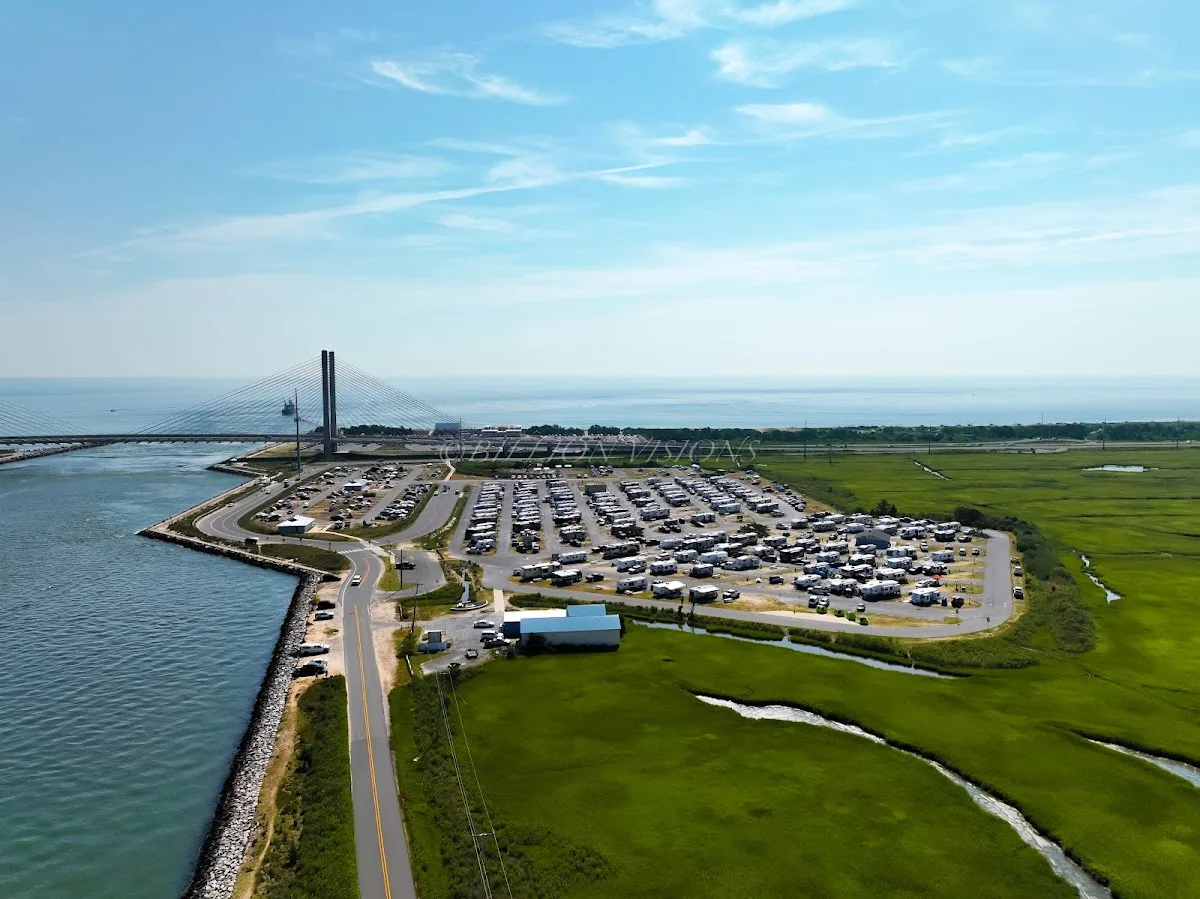
A beach day from the Delaware Seashore State Park South Campground can include a walk across the Indian River Inlet Bridge. The campground edge is about 400 yards from the beach, so campers have a nearby shoreline option without staying directly on the sand. The mix of full-hookup, no-hookup, and tent-only sites also helps determine which camping setup fits the trip.
Use the inlet bridge as your beach-day route
A separate pedestrian and bicycle path crosses the Indian River Inlet Bridge. From the campground, head south toward the swimming beach; heading north leads a short distance inland toward Indian River Marina, where visitors can buy fresh fish or dine. The bridge makes it possible to pair beach time with a stop in the marina area on foot or by bike. For drivers, Delaware State Parks’ directions place the South Shore entrance just after the Charles W. Cullen Bridge when traveling south on Route 1. That road landmark helps distinguish the campground entrance from the path campers can use for the beach walk.
For a beach outing, account for the walk when packing chairs, coolers, and other gear; carrying less can make the trip easier, particularly for groups making more than one trip. The pedestrian and bike path also gives campers an alternative to driving between the campground and the swimming beach.
Choose a site type that fits the camping setup
The South Inlet campground has 151 full-hookup sites, 86 sites without hookups, and 33 tent-only sites, according to Delaware Seashore’s campground details. That range makes the location relevant to different kinds of campers, but it is worth matching the reservation’s actual site type to your equipment rather than assuming all areas work the same way. RV travelers who need hookups should look for a full-hookup site; tent campers should focus on the tent-only option. Site availability and current terms can change, so use the state’s current reservation information for the dates you want.
Group size also affects planning: each campsite may have up to eight people, and the published details specify an additional $2 per day for each person beyond the first four. That charge is a per-person daily amount, not a flat fee for the whole group. At the eight-person limit, the added charge would total $8 per site per day. Check the current booking terms before finalizing a larger party, especially if multiple households are sharing one site.
Let service seasons define the day’s expectations
The service calendar has two different periods: campground information lists lifeguards between Memorial Day and Labor Day weekends, while the two on-site restaurants are open from late May through mid-October. If supervised swimming or restaurant dining is central to your plans, choose dates with those respective periods in mind; the schedules do not begin or end on exactly the same dates.
Build arrival and activities around the rules
Campground check-in is listed as 1:00 p.m., with no early check-ins permitted, and check-out is noon. That makes an early beach visit on arrival day a separate plan from getting onto the campsite: do not count on occupying your site before check-in. The details advise visitors arriving more than 24 hours after check-in to notify the park office at 302-227-2800 or 302-227-6981, so late-arrival plans should be handled directly with the park rather than assumed.
Delaware requires a fishing license for saltwater and freshwater fishing, including recreational clamming and crabbing. This applies to those activities, not to general park entry. Licenses may be purchased from authorized Division of Fish & Wildlife agents or at State Park offices, so include the requirement in your plans if those activities are part of the trip.


