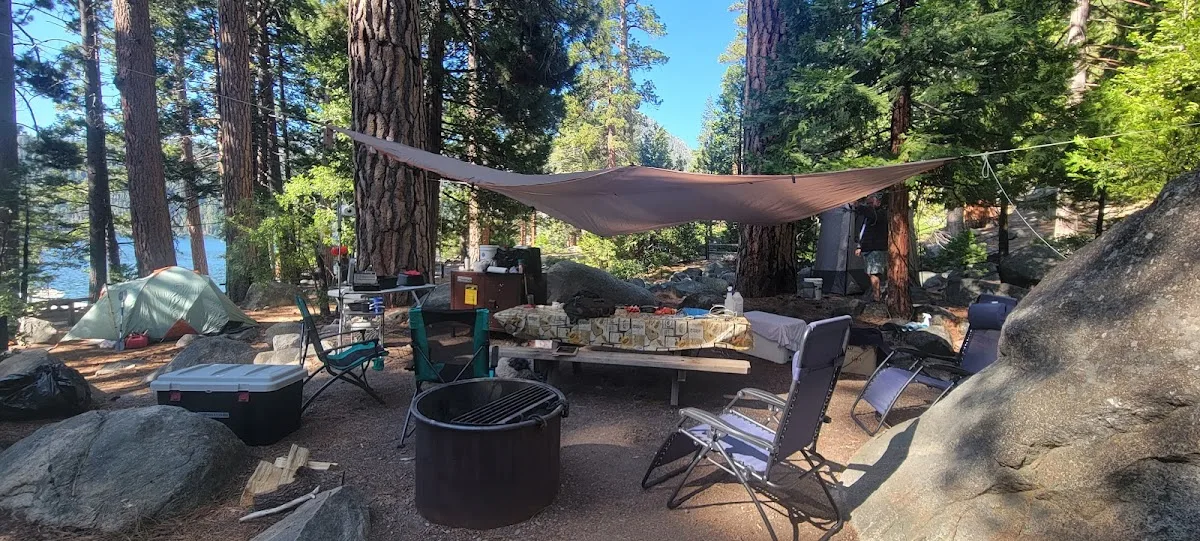
Emerald Bay Boat Camp is not a drive-up campground with a simple roadside arrival. It is a choice for campers who want to reach a Lake Tahoe campsite by water or on foot and are willing to trade convenience for a more unusual setting. The current listing identifies it as a Family Campground at 138 Emerald Bay Rd, South Lake Tahoe, CA 96150, and shows a 4.7 rating from 2,285 reviewers. Those signals make it appealing, but the access question should come before the scenery question.
Water access is the defining commitment
California State Parks places the Boat Camp on the north side of Emerald Bay, about one-half mile east of Fannette Island. That geography explains why ordinary car-camping assumptions can lead to a poor fit. Campers need a realistic plan for transporting people, food, water, shelter, and safety equipment from the launch point or trail approach to the site. A reservation alone does not solve the logistics of moving a full load across a lake or along an access route.
This setting is strongest for paddlers, boaters, and experienced campers who enjoy making the approach part of the outing. It is less suitable for anyone who needs to unload beside a vehicle, bring a large RV, or keep every supply within an easy parking-lot walk. Before booking, confirm the currently permitted access method, launch conditions, and any equipment limits with California State Parks.
Emerald Bay’s landmarks add a second layer to the trip
The campground’s location is not isolated from the park’s better-known features. The official Emerald Bay State Park information notes that Fannette Island sits in the bay and that Vikingsholm can be reached from the Harvey West parking lot by a one-mile trail that drops 500 feet. These details matter for planning: a day around the bay can involve water travel, a steep return climb, or both, rather than a flat stroll from camp.
That landscape creates a useful distinction between a quiet base and an activity-heavy itinerary. Some campers may be content to settle in after the approach and keep the day close to the shoreline. Others may want to paddle, visit the island, or walk toward Vikingsholm. The latter group should budget energy for the elevation change and check current trail and park conditions rather than treating map distance as the whole effort.
Why the family-campground label needs interpretation
The current record labels Emerald Bay Boat Camp a Family Campground, and its public rating is a helpful sign of broad visitor interest. Neither label, however, describes the practical experience as completely as the access pattern does. Family suitability depends on the ages of the campers, comfort with water or hiking approaches, ability to carry equipment, and tolerance for changing weather at elevation.
Families considering the site should decide who will handle the heaviest loads, how children will be supervised near the water, and what happens if a planned boat approach becomes uncomfortable. The same questions apply to groups bringing older adults or anyone with mobility limits. A picturesque shoreline does not automatically mean an easy campground.
Details to verify before committing to a date
Seasonal access, reservation availability, fees, fire rules, drinking-water arrangements, toilets, pets, and the current status of boat or trail approaches can change. The campground record links to California State Parks at parks.ca.gov/?page_id=506, which is the sensible starting point for current park information. Campers should also verify whether their intended vessel, gear load, and campsite setup fit the latest rules.
It is worth checking weather and water conditions close to departure, especially when the trip depends on a paddle or small craft. Ask the managing agency where the permitted launch or landing point is, whether overnight parking requires a separate arrangement, and how cancellations or closures are handled. These are not minor administrative details: they determine whether the trip remains workable when conditions shift.
The right decision is about logistics, not just views
Emerald Bay Boat Camp makes sense for campers who actively want a water-access experience in one of Lake Tahoe’s most distinctive park settings. Its South Lake Tahoe address and high review snapshot provide useful orientation, while the official park geography supplies the more important planning context. Campers seeking a vehicle-adjacent, equipment-heavy, or highly predictable setup should compare other sites. Those ready to carry their gear, respect changing conditions, and confirm current rules may find that the approach is exactly what makes this campground memorable.