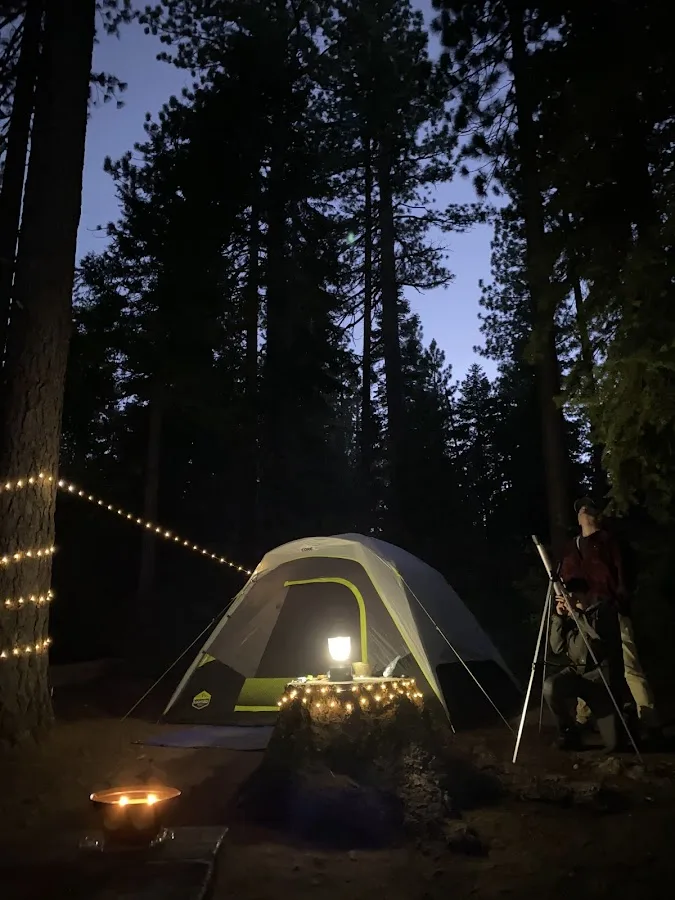
William Kent Campground suits campers who want a developed base on Lake Tahoe’s west shore without giving up the feel of a forested setting. The campground is a few miles south of Tahoe City and sits alongside California Highway 89, so its appeal comes from both access and setting: tall pine, cedar, and fir trees surround more than 80 sites, while a day-use area across the street provides a route toward the lake. The same location also means campers should think carefully about traffic, site type, and the day’s logistics before reserving.
West-shore access shapes the daily plan
The campground’s official Recreation.gov listing places it about two miles south of Tahoe City and notes that Tahoe City is less than five miles away. That makes William Kent practical for a trip built around more than staying at the site. Bike trails along Lake Tahoe’s western shore begin nearby, and the lake supports activities such as swimming, boating, water skiing, and fishing. A day-use area across the highway adds lake access, but crossing and moving between the campground and shoreline should be treated as part of the outing rather than an incidental detail.
The listed address is 1995 W Lake Blvd, Tahoe City, CA 96145, United States. Because the campground straddles a busy highway in a residential area, travelers who want a quiet, deeply remote campsite should set different expectations. Tree cover and shallow gullies help separate many sites from neighbors, yet the road remains an important part of the setting.
Site type matters more than a broad campground label
William Kent offers tent and RV campsites as well as yurts, and those options do not create the same packing list. Standard sites include a picnic table, campfire ring, pedestal grill, and bear-proof food-storage locker. Tent and RV sites have paved parking aprons, while the listing identifies a limit of one RV with its tow vehicle per single site and a maximum of six people per site. Campers bringing an additional vehicle should check the current fee and site allowance before arrival; most sites may accommodate one extra vehicle, but it is not included in the reservation fee.
Yurts provide a more structured shelter on a wooden platform, with a futon and bunk beds with mattresses for a family-sized setup. They do not include cooking supplies or bedding, and pets are not allowed inside them. That distinction is easy to miss when comparing campsite and yurt listings, so the reservation’s exact unit description should drive what each group brings.
Water, food storage, and fire rules deserve early attention
Flush toilets and drinking water are provided, but the official listing does not make those facilities a substitute for planning meals, gear, and site-specific needs. Every standard site and yurt has a bear-proof food locker, and the campground advises visitors to use appropriate food storage because bears frequent the area. Food, scented items, and cooking equipment should be organized so they can be secured promptly rather than left around the picnic table.
Fire conditions can change with hot, dry weather. Campfires and charcoal fires may be restricted, so the current fire notice should be checked close to the trip. The campground also prohibits off-road vehicles, chainsaw use, and hunting in the area. Boaters should arrive with clean, drained, and dry equipment to help prevent the spread of aquatic invasive species.
Arrival details can affect a reservation
The Recreation.gov page says staffing is limited and lists (530) 541-1537 for general information. It also states that all campers must register with the camp host. Pre-check-in does not remove the need to check in with the campground office on arrival. Reserved sites are held until noon on the day after the scheduled arrival; if the site is not occupied by that checkout time, the reservation may be forfeited and released. These details make arrival timing particularly important for anyone driving from a distance or planning a late start.
Before booking, campers should confirm the current operating dates, reservation terms, fees, fire conditions, and vehicle rules through Recreation.gov or the listed phone number. The same check is worthwhile for pet limits: the official notice allows up to two pets per campsite, but pets are not allowed on beaches or inside yurts.
Who will find William Kent a good fit?
William Kent is a strong match for campers who value several outdoor options within a short drive or ride, need a choice between tent, RV, and yurt accommodation, and are comfortable with a developed campground near a highway. Its 4.4 rating from 234 reviewers may help indicate broad visitor interest, but a review score cannot answer whether a particular site has the desired road distance, shade, orientation, or room for a vehicle setup.
For the most useful reservation decision, compare the exact site details with the group’s equipment, pets, arrival time, and planned lake activities. The campground’s west-shore position is the defining advantage, while its highway setting and detailed arrival rules are the practical tradeoffs to confirm before committing.