Redwood Creek Dispersed Camping is not a conventional campground with a quick pull-in and a row of prepared sites. It is a primitive and backcountry option in California, southeast of Orick, where the overnight experience depends on walking, carrying supplies, and reading current park conditions. The National Park Service identifies it as the only area in the park where dispersed camping is allowed. That distinction makes the place appealing to experienced backpackers, but it also makes preparation part of the campsite itself.
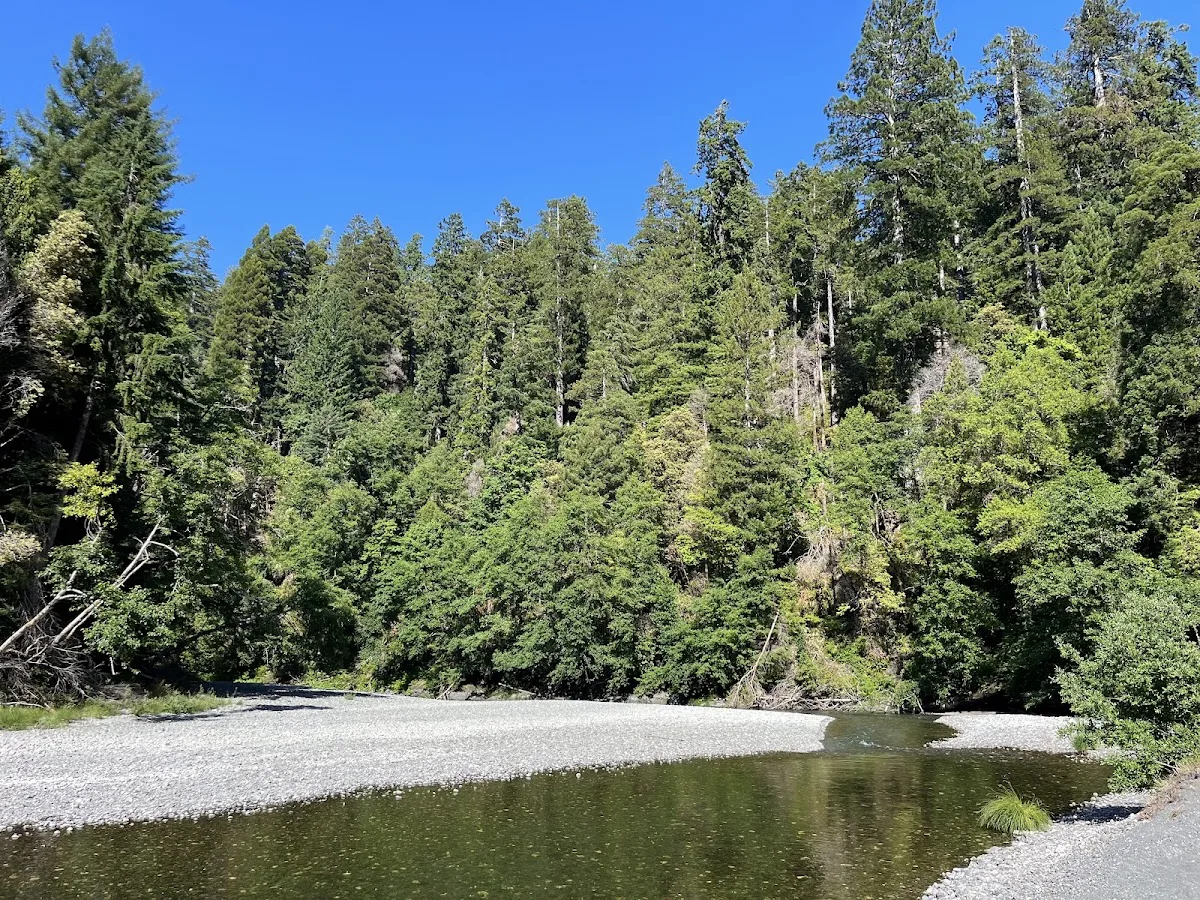
The gravel bar, not the trailhead, is the real destination
From the Redwood Creek Trailhead, the nearest dispersed camping area is 1.5 miles upstream, or south, along the creek. Camping is permitted only on the gravel bar south of McArthur Creek; downstream camping is prohibited. Tent camping is also not allowed within one-quarter mile of Tall Trees Grove. These boundaries are easy to overlook when a trip is planned from a map alone, so the official Redwood Creek Dispersed Camping page and its detailed guide should be reviewed before departure.
The access rules narrow the audience further: the dispersed gravel-bar area is for hikers. The park says bicycles, horses, and pets are not permitted for this camping access. A group that normally builds an itinerary around a dog, pack animal, or bike should treat that restriction as a decision point rather than a minor detail. The listing is categorized as Primitive & Backcountry, and that label is a more useful planning signal than the broad word “camping.”
A permit and group limit define the night
An overnight backcountry permit is required. The maximum group size is eight people, while larger groups need multiple permits and must camp at least one-quarter mile apart. The entire gravel-bar area allows no more than 50 dispersed campers per night. Those limits affect both group coordination and the choice of arrival date, even though no nightly rate or reservation availability should be assumed from a directory listing.
Before committing to the trip, campers should confirm the current permit process, fire restrictions, access notices, and any temporary closures with the National Park Service. The official source is nps.gov/places/redwoodcreekdispersedcamping.htm. A current review is especially important because bridge access and creek levels can change the practical route.
Water and weather are central logistics
There is no treated water source at the dispersed camping area. Campers need to carry sufficient water or bring a filter or purifier. The park advises using filtered or purified water from Redwood Creek tributaries rather than the main channel. This is not a place where a small bottle and an assumption about a nearby spigot make a workable plan.
Redwood Creek may be impossible to cross during the rainy season or high-flow stages. Two bridges over the creek are only in place seasonally, usually from June through September, according to the NPS page. Those dates are a planning reference, not a guarantee of access. Rain, flow, bridge status, and current conditions should be checked close to the trip. A route that looks short on paper may be impractical if a crossing is unavailable.
Bear storage and waste procedures are non-negotiable
Bears are common in this area, so food, garbage, cooking equipment, and other odorous items must be stored correctly. The park describes two options: suspend items at least 10 feet above the ground and four feet horizontally from a tree trunk, or secure them in a bear-resistant canister. Keeping a clean camp includes crumbs and garbage; feeding wildlife is illegal and dangerous.
Waste planning is equally specific. Solid human waste should be buried in a hole at least six inches deep and at least 200 feet from water, campsites, and trails. Used toilet paper must be packed out, along with all other trash. Campers should bring a dedicated waste system before leaving the trailhead rather than treating disposal as an afterthought.
Fire rules still require a same-day check
Under normal conditions, fires are permitted on the gravel bar, and the park allows collection of up to 50 pounds of dead and downed wood per day per campsite. That permission is conditional: fire restrictions may be imposed, and current notices control. When fires are allowed, a ring of larger rocks should contain the fire, it must never be left unattended, and it should be fully extinguished and dismantled before departure.
Who should choose this kind of stay?
Redwood Creek Dispersed Camping suits campers who are comfortable with a short hike carrying water, food, shelter, and waste supplies, and who are willing to follow precise backcountry limits. It is less suitable for a casual overnight, a pet-centered trip, or anyone expecting treated water, vehicle access to camp, or developed-site conveniences.
A public listing shows a rating of 3.7 from 3 reviewers, but that small sample should not outweigh the official access and safety information. The most dependable decision comes from matching the trip to the NPS rules: secure a permit, verify creek and bridge conditions, plan for water, store food properly, and confirm fire restrictions. In California’s Redwood Creek country, those details are what turn a primitive campsite into a responsible overnight plan.