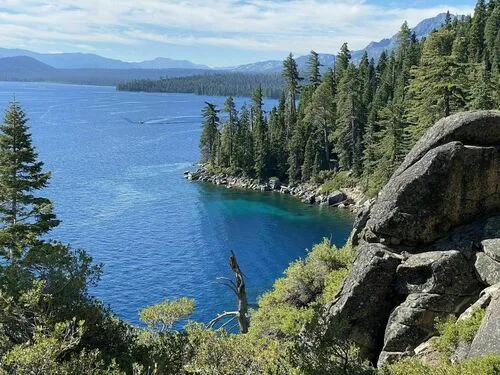
D. L. Bliss State Park is not simply a name on a Lake Tahoe itinerary. It is a specific camping choice on Highway 89, north of Emerald Bay, where the setting, vehicle limits, dog rules, and available overnight formats all shape the trip. The California State Parks page places the park 17 miles south of Tahoe City and identifies it as a destination with popular beaches and hiking trails. That combination makes the park appealing, but it also means campers should match the site to their actual equipment and plans rather than rely on the broad Lake Tahoe label.
Highway 89 puts the park between Tahoe City and Emerald Bay
The address listed for D. L. Bliss State Park is 9881 CA-89, South Lake Tahoe, CA 96150, United States. The official park information describes the property as a couple of miles north of Emerald Bay and 17 miles south of Tahoe City. These reference points are useful when estimating drive time, planning a day around the west shore, or deciding whether the park works as a base for a particular outing. They also make arrival planning important: a reservation may be convenient on paper, but the route and the day’s activities still need to fit the group’s schedule.
Day-use hours are listed as sunrise to sunset. That does not answer every overnight question, so campers should review the current reservation details and park notices before leaving. The official page also lists a $10 vehicle day-use fee, while noting that prices can change and that special rates may apply during peak periods, holidays, and weekends.
Vehicle dimensions should be checked before an RV trip
D. L. Bliss State Park has useful information for campers bringing larger equipment, but the limits are specific. The official listing gives a maximum trailer length of 15 feet and a maximum camper or motorhome length of 18 feet. Those figures should be compared with the complete setup, including the tow vehicle, hitch arrangement, and the site’s maneuvering needs. A traveler who normally treats “RV access” as a general promise should instead verify which site type fits the actual vehicle.
The park information identifies overnight facilities that include tent camping, group campsites, hike-and-bike campsites, RV access, and an RV dump station. That range supports different kinds of trips, but it does not mean every facility is available for every date or every reservation. Before booking, campers should check the site description, length restrictions, equipment requirements, and current operating information for the specific campground area.
Dogs are allowed in developed areas, not on every trail
Dog policy can change the shape of a Tahoe camping day. California State Parks currently says dogs are allowed in developed areas at D. L. Bliss State Park, including campsites, paved roads and paths, dirt fire roads, paved parking areas, developed picnic areas, and day-use areas. Dogs are not allowed on beaches or dirt trails according to the same official page.
That distinction matters for a group expecting to move freely between camp, shoreline, and hiking routes with a pet. A dog-friendly campsite does not make the beach or dirt-trail portion of the visit dog-friendly. Campers should plan a separate activity pattern for the pet and confirm any updated restrictions before arrival, especially when weather, construction, or seasonal conditions affect access.
Camping choices should follow the day’s main activity
The park’s combination of hiking trails and one of the Lake Tahoe region’s popular beaches may suit campers who want both time at camp and access to outdoor activities. A hike-and-bike site could serve a cyclist or human-powered traveler differently from a tent site, while a group campsite may require a different kind of coordination. The right question is not whether the park offers many activities in the abstract; it is whether the selected site and the group’s equipment support the day being planned.
Parking is listed among the available amenities, and the official page provides maps, a campground map, and accessibility information. Those resources are more useful than a generic packing list because they can help a visitor understand the layout and identify questions about walking distances, surfaces, and vehicle access before committing to a date.
Use the public record as a comparison signal, not a guarantee
The current listing shows a 4.6 rating from 534 reviewers. That is a helpful signal when comparing South Lake Tahoe camping options, but it cannot confirm a particular site, fee, facility, or reservation outcome. Conditions and availability change, and the state park page notes that availability is updated frequently. Campers should use the official reservation path for the date and site type they need.
For direct questions, the published phone number is +1 530-525-7277. The California State Parks page at parks.ca.gov/?page_id=505 is the best starting point for current restrictions, reservations, fees, facilities, maps, and park notices. Checking those details before departure can prevent a mismatch between a vehicle, a pet, a planned trail day, and the campsite actually selected.